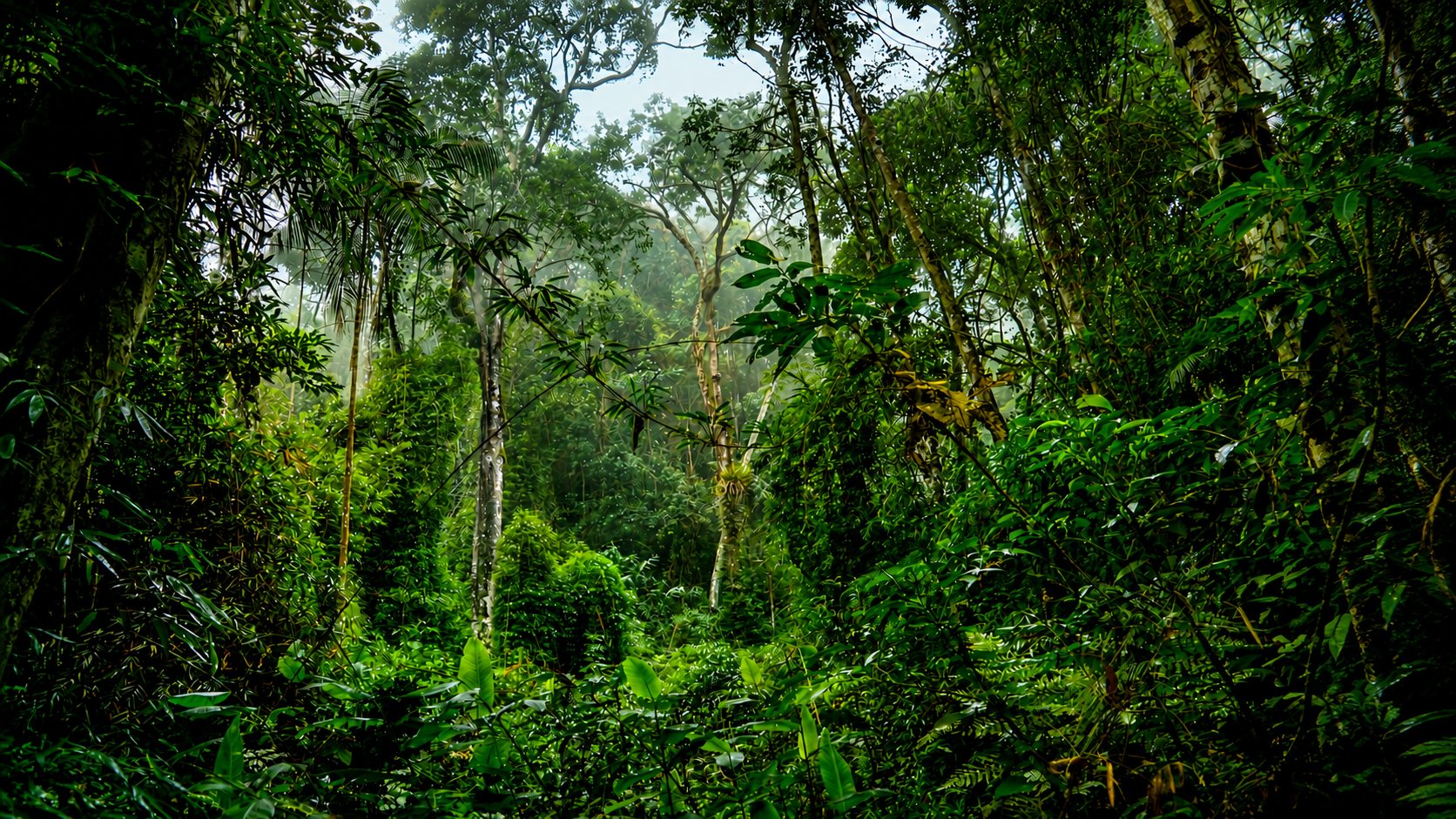
Forest restoration
and Regeneration
11,079 hectares available for corporate restoration
We deliver forest restoration and regeneration. Our corporate programmes combine native-species reforestation and assisted natural regeneration where appropriate, with site planning, maintenance and monitoring.
Our current project is based in Tiapleu, Côte d’Ivoire, where we are working with THANRY’s local forestry team.
Programmes from 50 hectares · Corporate-funded restoration
This offer funds restoration; it does not include carbon credits.
Your company’s restoration programme
At Tiapleu, your company can fund forest recovery on a defined area of land, with local teams carrying out the work and EWOOD coordinating your programme.
A clearly mapped restoration area
The map below shows the restoration area. We identify the plots for your programme and select the approach suited to their condition.
Local teams to carry out the work
THANRY’s teams prepare the land, plant and care for the trees, with maintenance and replacement arrangements agreed for your programme.
Evidence your team can use
Dated photographs and field records help your team follow progress and explain the work your company supports.
Available restoration land at Tiapleu
At Tiapleu, near Danané in western Côte d’Ivoire, degraded forest sits alongside cocoa and coffee farms. Clearing, logging and recurring fires have reduced tree cover. Restoring this landscape means choosing the right work for each plot and involving the people who use it.
The 11,079-hectare restoration area is shown in brown on the map below, alongside the separate 6,000-hectare carbon project outlined in blue.
Working with the people who use the land
The Tiapleu plan involves farmers in decisions about species and planting arrangements. It also provides for local participation in nursery work, planting and care. We establish participation and benefit arrangements with the people concerned before each programme starts.
Explore the land with us →The land and the delivery team
Société Industrielle Thanry (SIT) holds the concession over the state-owned land, granted for an original term of 50 years in April 2023.
The concession and authorisation documents are available for review. For each proposed area, we confirm boundaries, permissions and arrangements with land users before work starts.
Concession details and programme boundaries
Agreement No. 00011, April 2023. Source: EWOOD project intake, 5 October 2026, land-tenure section. The 50 years refers to the original concession term. Your programme funds restoration work; it does not transfer land ownership or include carbon credits.
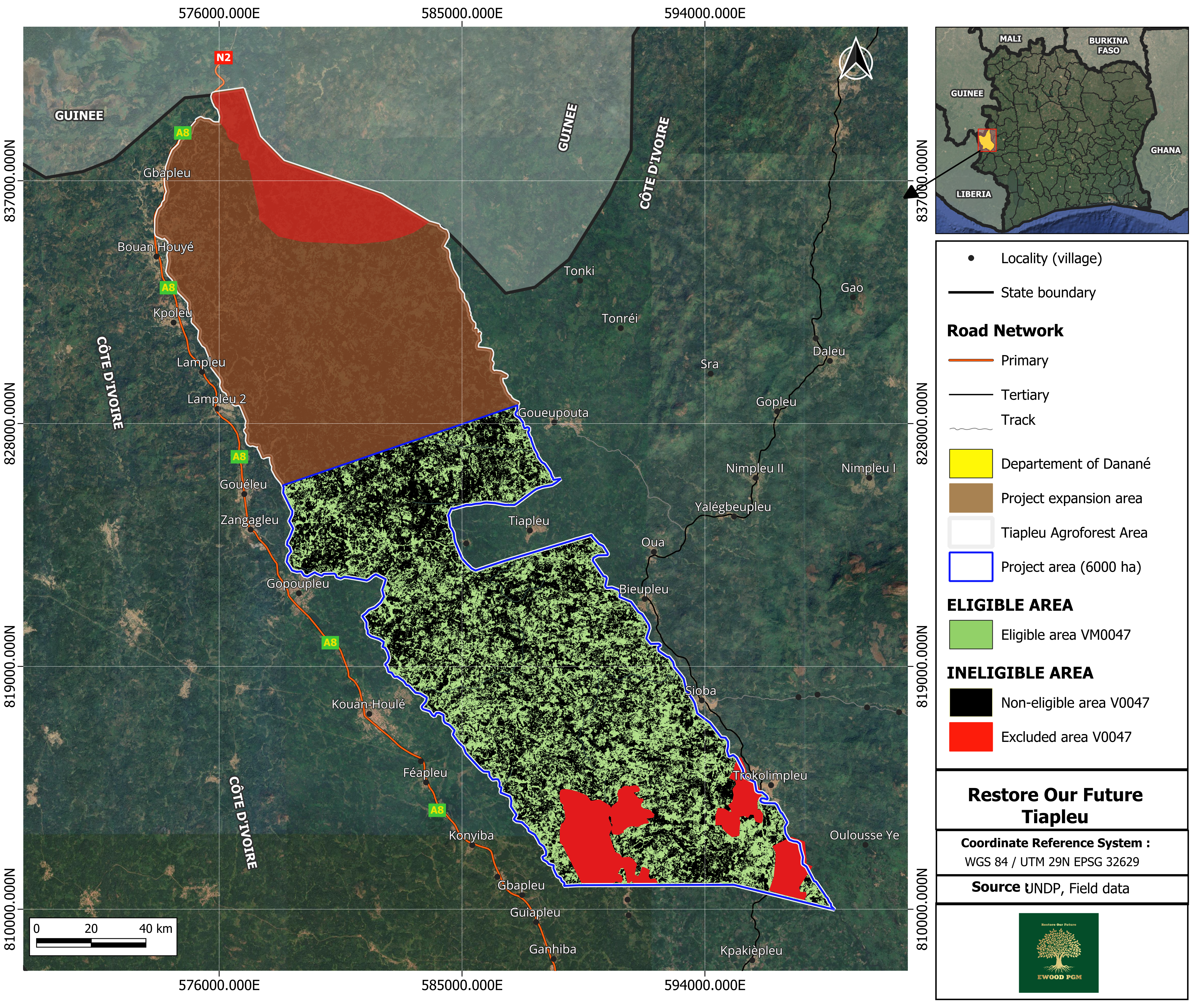
The red areas are excluded under the carbon methodology. They do not, on their own, tell us which land is suitable for restoration. Open the original map ↗
Experience at Tiapleu and across Côte d’Ivoire
The team’s experience includes 788 hectares of agroforestry recorded as planted at Tiapleu between 2022 and 2025, in the same landscape as the new restoration opportunity.
Species in the Tiapleu plan include Acajou, Fraké, Framiré, Iatandza and Akpi. The mix for your area is selected for local conditions and in consultation with the people using the land.
Source: Tiapleu Restoration Plan, September 2026, Tables 2 and 3. These are reported historical planting areas, separate from a new corporate-funded programme.
The planting record
The annual figures record area planted, rather than surviving trees.
View the annual planting figures
| Year | Area planted |
|---|---|
| 2022 | 147 ha |
| 2023 | 181 ha |
| 2024 | 75 ha |
| 2025 | 385 ha |
| Total | 788 ha |
Backed by THANRY’s wider forestry experience
THANRY reports 12,107 hectares reforested in Côte d’Ivoire between 2004 and 2022. Its work includes compensatory reforestation and restoration in managed classified forests, supported by community nurseries and local planting teams. This is THANRY’s regional track record, distinct from the Tiapleu pilot figures above.
View THANRY’s published track record ↗Start with 50 hectares
Start with 50 hectares, or discuss a larger partnership. We develop the proposal around your objectives, the land and your budget.
What you review before committing
- A map of the proposed plots and their current condition
- The restoration methods and species suited to the site
- A timetable and budget for establishment and ongoing care
- The monitoring measures and reports your team will receive
Planning the work on the ground
We assess where new planting is needed, where existing vegetation can recover and where trees can be integrated with crops. Planting is timed for the rainy season, with weeding, replacement planting and fire protection specified for the site.
The proposal confirms the care period and responsibilities. You can explore expansion after reviewing the first phase and further suitable land.
Explore illustrative planting quantities for 50 hectares
| Approach | Planning density | Initial trees on 50 ha |
|---|---|---|
| Mixed-species reforestation | 1,110 trees per hectare | 55,500 |
| Agroforestry, where suitable | 208 trees per hectare | 10,400 |
Calculated from the planting densities in the September 2026 Tiapleu plan for the separate 6,000-hectare project. These are examples, not a fixed specification for the corporate restoration area or a guarantee of surviving trees. Replacement stock is additional. Natural regeneration is assessed differently and may need less planting.
Follow the work your company funds
Follow what happens after planting through records of tree condition, maintenance and any corrective work.
We agree the reporting measures and schedule with you, so your team has evidence for internal updates and accurate communication about its involvement.
How monitoring is set out in the Tiapleu plan
The September 2026 plan calls for monthly plantation inspections and survival assessments, alongside fire protection and patrols. Your corporate proposal confirms the measures, care period and reporting schedule for your plots. Monthly field inspections do not imply monthly customer reports.
Records behind the reporting
Summary of the plan’s field operations and monitoring procedures (Table 4 and sections 8.2–8.4), not a completed monitoring report. Corporate reporting is specified in the programme agreement.
From first conversation to fieldwork
Tell us what your company wants to support, your timing and the scale or budget you have in mind.
We take you through suitable land, the proposed approach and relevant project documents for your team’s review.
Review the scope, cost, timetable, care arrangements and reporting. The agreed programme sets out each party’s responsibilities.
Once work begins, you receive updates on progress against your programme’s plan.
Frequently asked questions
How do reforestation and natural regeneration differ?
Reforestation brings forest cover back to an area and can include planting native trees. Assisted natural regeneration helps seedlings and other vegetation already on the site recover. We look at the condition of the land to decide which approach, or combination, is suitable.
What does a programme cost?
Costs depend on the site, restoration method and care period. We provide an itemised quotation setting out establishment, maintenance and reporting costs for the agreed work.
Can we start with a smaller area?
Our starting scale is 50 hectares. The final area and timing depend on the site assessment.
Can we review the project documents?
Yes. We can arrange access to relevant material from the project data room, including the restoration plan and concession and authorisation documents. We’ll identify the documents that apply to your proposed area and explain which relate to the separate carbon project.
Are carbon credits included?
No. Your funding supports restoration work; this programme does not include carbon credits. If you are looking for credits, please see our separate carbon-credit offering for more information.
How can we share our involvement?
You can explain the work your company funds and share results supported by the programme’s evidence. Your sustainability team should review any environmental claims. Funding this programme does not, by itself, offset your company’s emissions.
How are local communities involved?
Farmers are involved in planning, with roles for local people in nursery work, planting and care. Read about local participation at Tiapleu.
Let’s discuss your restoration programme
Tell me your company’s priorities and timing. I’ll take you through the Tiapleu opportunity and share the documents your team needs to decide on the next step.
Your contact
Saajida Lutz · EWOOD PGM
saajida@ewoodpgm.com
Use the form to draft an email to our team. You can check it in your email app before sending.
